Executive Summary
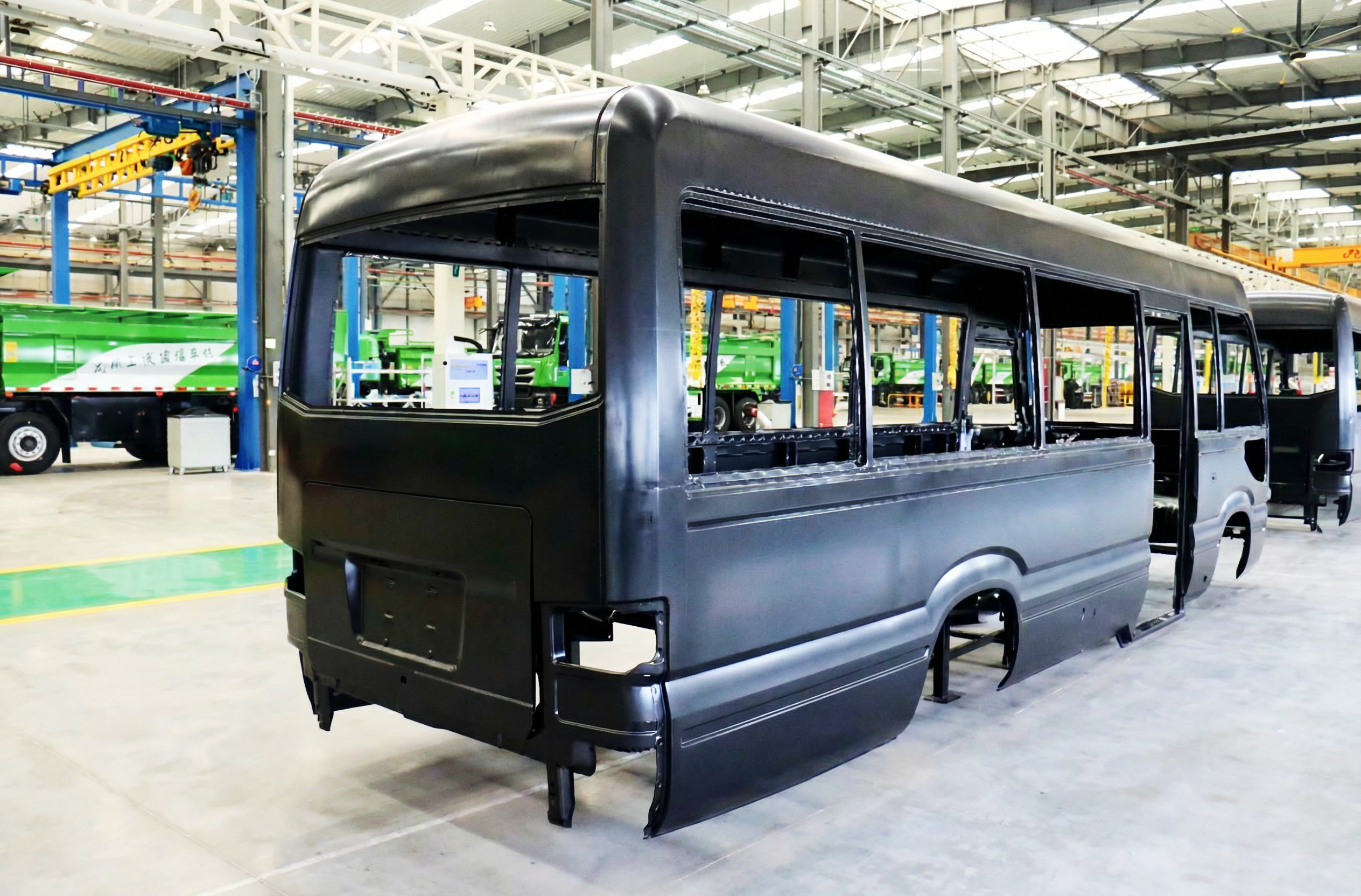
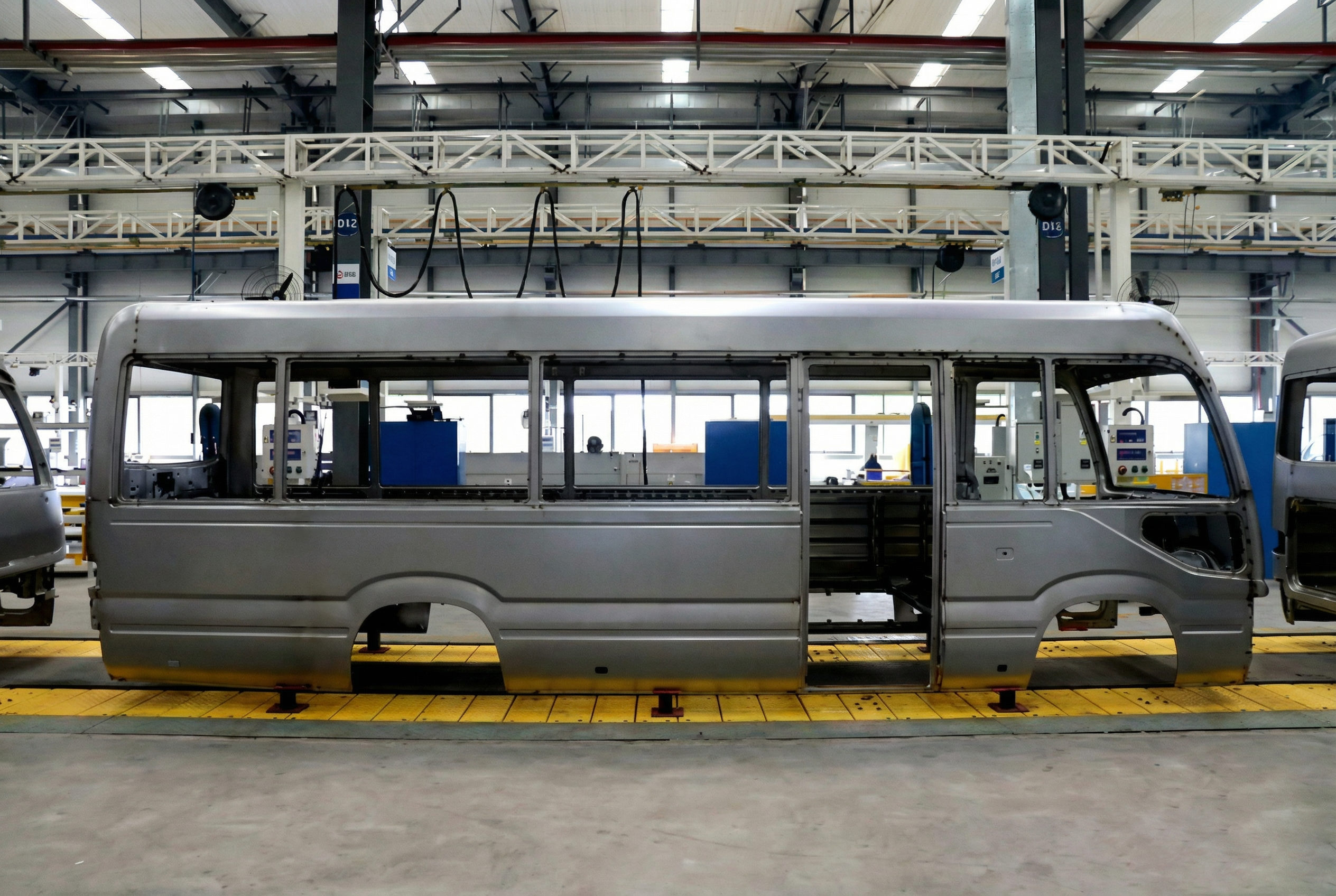
CCIG has established itself as a leading manufacturer of high-quality Coaster bus bodies through advanced manufacturing processes, precision engineering, and unwavering commitment to international quality standards. Our state-of-the-art production facility represents comprehensive manufacturing capability that transforms raw materials into premium commercial vehicle bodies through precision automation, rigorous quality protocols, and industrial-scale production discipline.
This isn't merely vehicle assembly; it represents a complete manufacturing ecosystem where advanced technology, skilled craftsmanship, and systematic quality control converge to deliver mission-critical transportation equipment.
Manufacturing at Industrial Scale: The Engineering Architecture
Precision Foundation Through Advanced Material Processing
Every Coaster bus body begins with premium high-strength steel panels, processed through CCIG's integrated CNC laser cutting and forming systems with tolerance specifications of ±0.5mm. This precision at the material stage eliminates dimensional drift across the entire production cycle—a critical factor when manufacturing commercial vehicle bodies that must maintain structural integrity throughout years of demanding service.
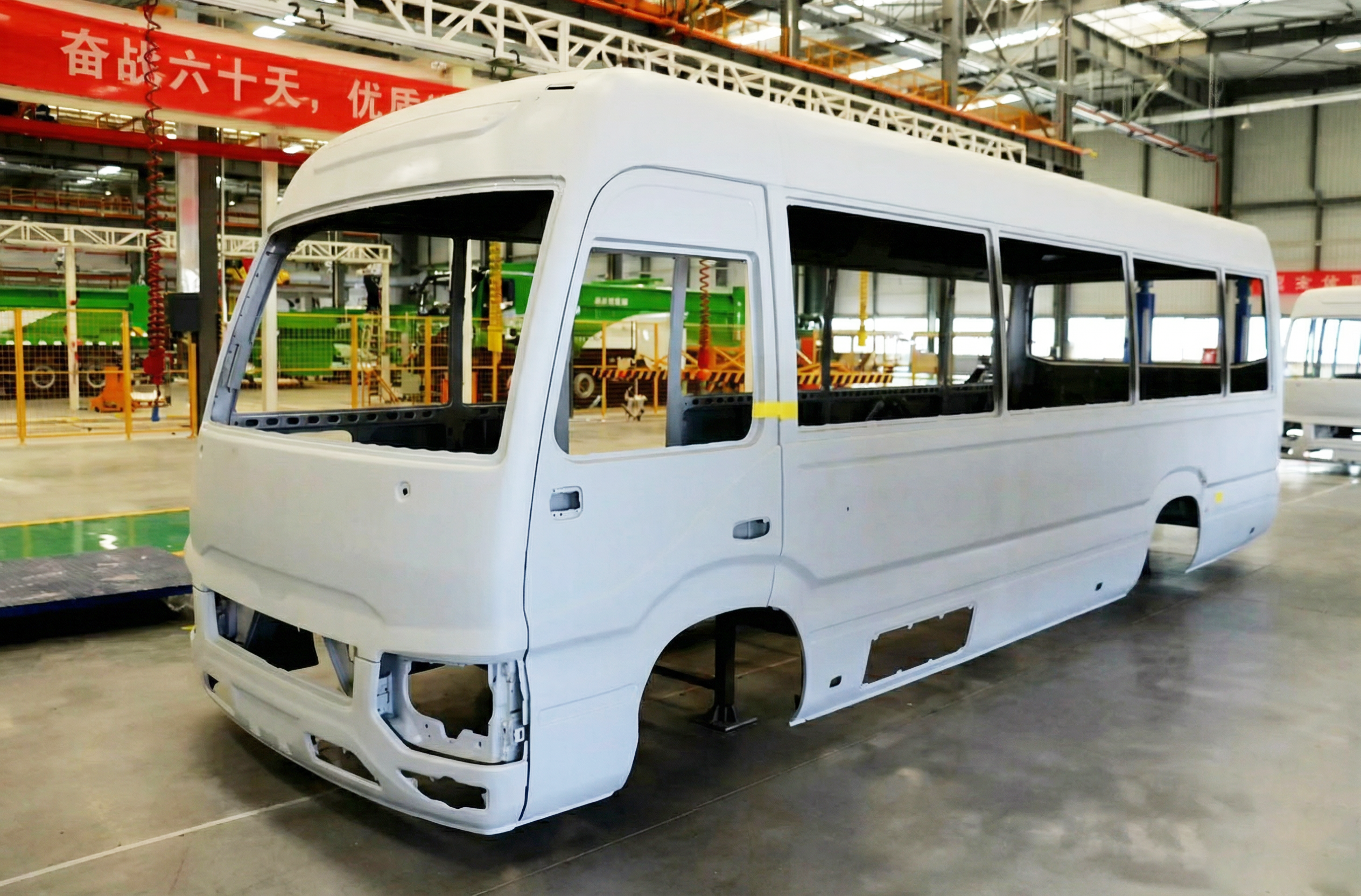
Our automated material processing system handles both major structural components and intricate detail panels with consistent accuracy. The CNC laser cutting technology ensures:
- Perfect Edge Quality: Clean, burr-free cuts that require minimal secondary processing
- Complex Geometry Capability: Precise execution of intricate panel shapes and mounting hole patterns
- Material Optimization: Efficient nesting algorithms minimize waste while maintaining quality
- Repeatability: Identical component geometry across unlimited production runs
Consistency begins here, at the molecular level of material preparation.
Robotic Welding & Precision Fabrication: Structural Integrity Through Automated Excellence
The critical structural joints—frame connections, panel seams, and reinforcement elements—are executed through advanced robotic MIG/TIG welding technology combined with precision manual craftsmanship where required. This hybrid approach delivers irreplaceable advantages:
Deep Penetration Control: Robotic systems maintain consistent heat input, travel speed, and wire feed rate, ensuring weld metal fully fuses with base material. This eliminates subsurface voids, porosity, and incomplete fusion that compromise structural integrity and cannot be detected through visual inspection alone.
Repeatability Across Production Cycles: Robotic parameters are programmed once and executed identically across every unit. Manual fabrication introduces inherent operator variability in arc length, travel angle, and heat input; automation eliminates these variables entirely, delivering identical weld quality regardless of production volume.
Bead Formation Perfection: Consistent bead geometry means stress distribution is uniform across all welded joints, reducing fatigue risk during the thousands of load cycles each vehicle experiences throughout its service life.
Dimensional Accuracy Through Advanced Fixturing: Our precision positioning systems and overhead conveyor networks ensure perfect alignment throughout assembly. Specialized jigs maintain component position within 0.5mm tolerance during welding operations. Each bus body maintains exact geometric specifications from initial frame construction through final panel installation.
Multi-Stage Surface Treatment: Professional-Grade Coating Systems
Each vehicle body undergoes comprehensive surface preparation through our advanced coating facility—this is not simple paint application but an engineered corrosion protection system designed for long-term performance.
Automated Surface Preparation Protocol:
Every body shell passes through systematic processing stages:
- High-Pressure Cleaning: Removes manufacturing residue, cutting oils, and contamination
- Chemical Degreasing: Ensures complete surface cleanliness at molecular level
- Phosphate Treatment: Creates micro-crystalline conversion coating that enhances paint adhesion and provides base-level corrosion protection
- Rinse Cycles: Multiple stages remove chemical residue without introducing new contamination
This foundation determines long-term coating performance. Surface preparation consumes 50% of coating process time but determines 80% of long-term durability.
Professional-Grade Multi-Layer Coating Application:
Our automated spray booth systems deliver precision coating with controlled environmental conditions:
Primer System Application:
- Electrostatically applied epoxy-based primer creates chemical barrier between base metal and environmental exposure
- Electrostatic charging ensures uniform coverage including recessed areas and complex geometry
- Automated spray parameters eliminate thickness variation and application holidays
- Typical dry film thickness: 40-60 microns with ±5 micron consistency
Intermediate Coat Building:
- High-solid content coatings build protective thickness while maintaining flexibility
- Formulated to absorb minor structural movement without cracking
- Critical for vehicle bodies experiencing continuous vibration and thermal cycling
- Creates depth for superior final finish appearance
Finish Coat Technology:
- Available in extensive custom color palette including solid, metallic, and pearl effect finishes
- UV-resistant polyurethane topcoats with superior gloss retention
- Two-component systems with controlled mixing ratios for consistent chemical cure
- Typical dry film thickness: 60-80 microns
- Automated application ensures uniform appearance across entire body surface
Controlled Curing Environment:
- Enclosed spray booth maintains temperature 20-25°C, humidity 50-60%
- Infrared curing accelerates solvent evaporation and chemical crosslinking
- Controlled conditions ensure identical cure properties regardless of external weather
- Total system dry film thickness: 120-180 microns
Quality Verification Through Specialized Inspection:
Each coated body passes through inspection stations equipped with specialized lighting systems that reveal surface imperfections invisible under standard illumination:
- Orange peel texture detection
- Dust contamination identification
- Coverage gap revelation
- Color consistency verification
- Gloss uniformity assessment
Only units meeting our zero-defect standard advance to final assembly. Rejection rate typically below 2%, with identified units returning for localized correction rather than complete recoating.
Modular Assembly Process: Efficiency Without Compromise
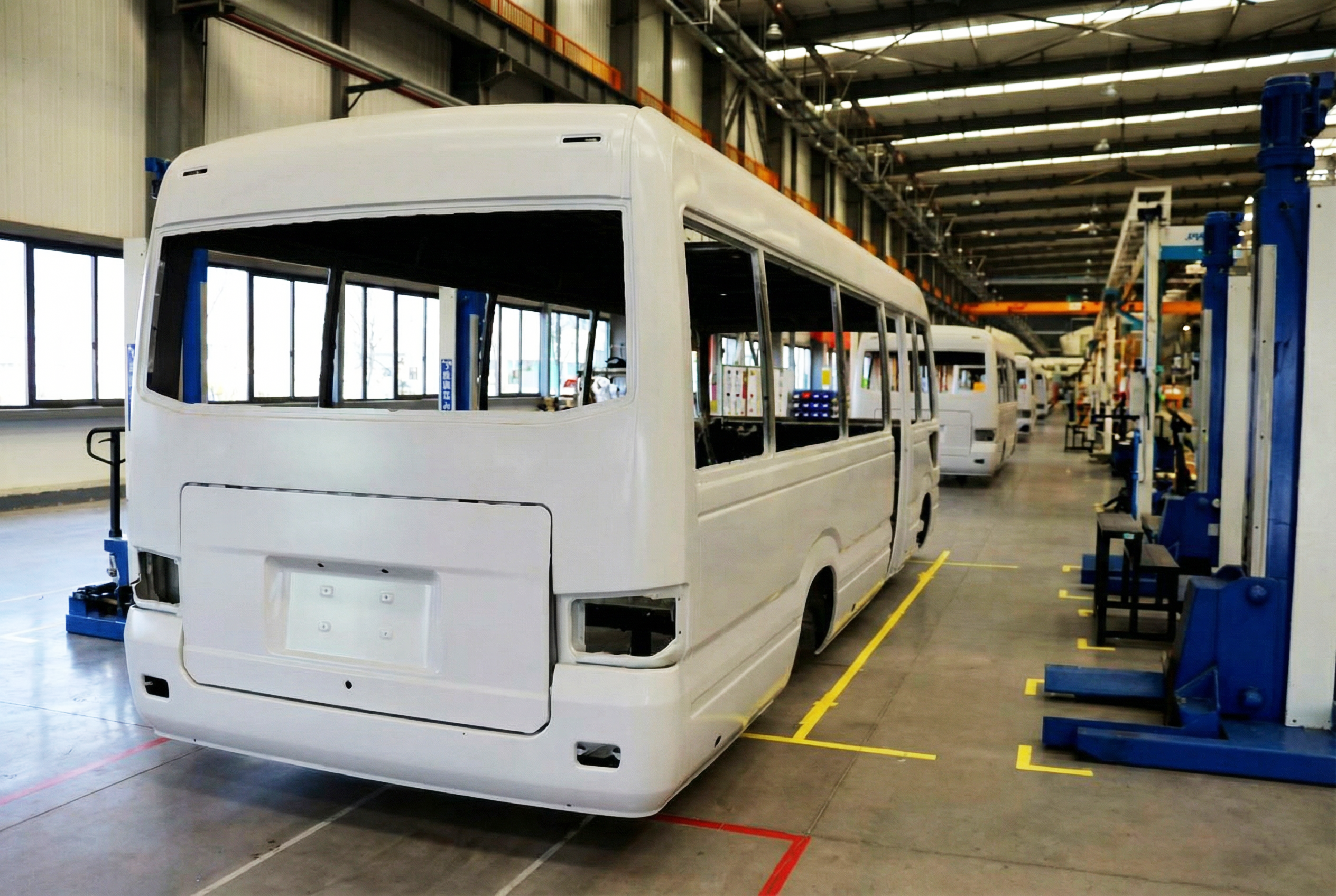
Our production line architecture reflects years of process optimization, moving each unit through specialized workstations designed for specific assembly operations:
Station 1 - Bare Shell Fabrication:
- Frame construction and major structural panel installation
- Precision jigs maintain dimensional accuracy throughout structural assembly
- Critical mounting points established with documented verification
- Foundation for all subsequent assembly operations
Station 2 - Secondary Panel Integration:
- Side panels, roof sections, and rear components installed
- Welding operations completed with documented parameter verification
- Seam integrity checked through visual and mechanical inspection
- Dimensional verification confirms maintained tolerance specifications
Station 3 - Window & Door System Integration:
- Precision fitting of glazing systems utilizing specialized installation tooling
- Entry doors installed with multi-point adjustment for perfect alignment
- Weather-tight seals applied with documented compression specifications
- Operational testing verifies smooth movement and positive latching
Station 4 - Interior Preparation:
- Interior structural elements installed per engineering specifications
- Electrical conduit routing completed following documented pathways
- Mounting provisions for seats, panels, and equipment installed
- Surface protection applied to prevent assembly damage
Station 5 - Pre-Delivery Inspection:
- Comprehensive quality verification checklist completion
- Functional testing of all doors, windows, and mechanical systems
- Final dimensional verification against engineering specifications
- Photographic documentation of completed unit
Digital Manufacturing Quality System: Real-Time Production Monitoring
Industrial-scale manufacturing demands sophisticated quality management beyond manual inspection protocols. CCIG's integrated digital tracking system monitors every production parameter in real-time.
Automated Data Capture Architecture:
Every bus body receives unique identification at production initiation. This identifier links to comprehensive digital record containing:
- Material lot numbers and certification documents
- CNC cutting program parameters and execution timestamps
- Robotic welding parameters: voltage, amperage, wire feed speed, travel speed
- Coating booth conditions: temperature, humidity, spray pressure, material batch numbers
- Inspection results at each quality verification station
- Operator identification for accountability and training assessment
- Equipment maintenance status ensuring production occurred on calibrated systems
Real-Time Process Monitoring:
Digital dashboards display production metrics continuously:
- Cycle Time Tracking: Identifies bottlenecks requiring resource adjustment
- First-Pass Yield: Percentage of units passing inspection without rework
- Parameter Deviation Alerts: Automatic notification when process variables drift from specifications
- Equipment Performance: Real-time monitoring of robotic systems, CNC machines, coating booth operation
- Material Traceability: Complete genealogy from raw steel coil to finished vehicle body
Predictive Quality Analytics:
Historical data analysis reveals trends invisible to manual monitoring:
- If welding parameters drift gradually across 50 units, the system identifies the pattern before structural integrity is affected
- If coating thickness shows increasing variation, automated alerts prompt equipment calibration before tolerance limits are exceeded
- Statistical process control algorithms distinguish between normal variation and meaningful deviation requiring corrective action
The result: manufacturing maturity where quality is built into every process step rather than inspected at completion.
International Standards Compliance: Engineering for Global Markets
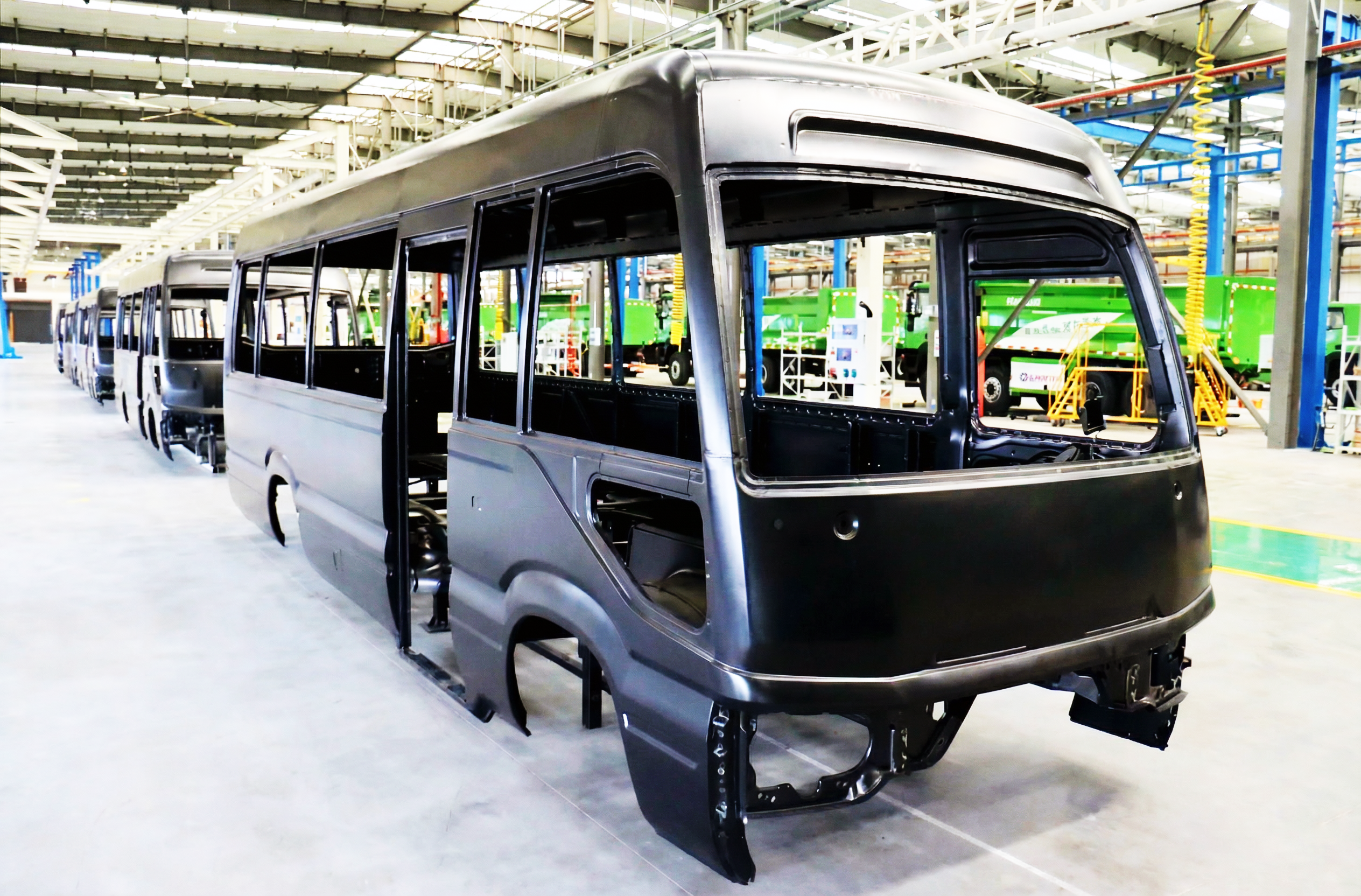
CCIG's manufacturing protocols meet rigorous international quality and safety standards:
Quality Management Systems:
- ISO 9001:2015 certified manufacturing processes
- Documented procedures for every production operation
- Continuous improvement protocols with measurable objectives
- Regular third-party audits verify ongoing compliance
Material Standards:
- Steel specifications meeting international automotive grade requirements
- Chemical composition verification through certified mill test reports
- Mechanical property testing confirms strength and ductility specifications
- Coating materials certified to automotive OEM specifications
Welding Standards:
- AWS (American Welding Society) qualified welding procedures
- Certified welding operators for manual operations
- Documented robotic welding parameters validated through destructive testing
- Non-destructive testing protocols for critical structural joints
Environmental Compliance:
- VOC (Volatile Organic Compound) emissions controlled within regulatory limits
- Coating materials meet environmental safety standards
- Waste stream management with documented disposal protocols
- Energy efficiency optimization reducing environmental footprint
Manufacturing Capability: The Competitive Differentiator
The commercial vehicle industry distinguishes between assemblers and manufacturers. Assemblers coordinate installation of purchased components. Manufacturers control the complete value chain: engineering, material processing, fabrication technology, coating systems, quality protocols, and compliance verification.
CCIG's Manufacturing Depth:
Material Science Control:
- Direct relationships with premium steel suppliers
- Incoming material inspection verifies specifications
- Material properties validated through certified testing
- Traceability from mill certification through finished product
Process Technology Authority:
- Robotic welding systems selected and programmed internally
- Coating booth design optimized for vehicle body geometry
- Assembly line architecture developed through production engineering expertise
- Equipment maintenance performed by trained technical staff
Quality System Maturity:
- Digital tracking infrastructure custom-developed for production requirements
- Inspection protocols validated through correlation studies
- Statistical process control with documented capability indices
- Corrective action procedures with root cause analysis
Engineering Integration:
- Production engineering team collaborates with design engineering
- Manufacturing feedback improves future design iterations
- Tooling and fixture design performed internally
- Continuous improvement driven by production data analysis
Continuous Investment in Technology:
- Regular equipment upgrades maintain technological competitiveness
- Automation expansion increases consistency and capacity
- Quality system enhancements leverage emerging digital technologies
- Workforce training ensures skill levels match equipment capability
Production Capacity & Flexibility
Our facility architecture supports diverse production requirements:
Volume Scalability:
- Multiple production lines enable capacity adjustment
- Shift scheduling flexibility accommodates demand variation
- Equipment redundancy prevents single-point-of-failure disruptions
- Material supply chain manages inventory for production continuity
Customization Capability:
- Standard platform accommodates extensive customer-specific variations
- Door configurations: single, dual, multiple entry points
- Window arrangements: fixed, sliding, various sizes
- Interior layouts: seating configurations, standing capacity, accessibility features
- Color options: unlimited custom colors matching corporate branding
- Special equipment provisions: wheelchair lifts, luggage compartments, custom mounting points
Quality Consistency Across Variants:
- Modular design approach maintains structural integrity across configurations
- Common manufacturing processes ensure consistent quality regardless of customization
- Documented change management prevents specification drift
- Each variant receives identical quality verification protocols
Conclusion: Manufacturing Excellence as Competitive Advantage
In competitive global markets, manufacturing capability determines long-term success. Product quality, delivery reliability, and cost competitiveness all derive from manufacturing process excellence.
CCIG's Coaster bus body production demonstrates manufacturing discipline across every dimension:
- Advanced automation delivering precision impossible through manual processes
- Comprehensive quality systems ensuring consistency across unlimited production volume
- Process control maturity enabling real-time monitoring and continuous improvement
- Engineering depth translating customer requirements into manufacturable designs
- International standards compliance meeting rigorous global market requirements
Manufacturing at this level requires sustained investment in technology, workforce development, quality infrastructure, and operational discipline. The visible result is premium product quality. The invisible foundation is manufacturing capability built through years of focused improvement.
Organizations choosing CCIG choose manufacturing partnership, not transactional procurement.
“Innovation is the core engine of our growth — we are proud to represent Jiangsu’s vision of global excellence.”
For more information about CCIG’s latest achievements and innovations, please stay tuned to our official website and follow our news updates.